

If you have ever talked about a product and then seen an advertisement for it, you may have wondered whether your phone is listening. The concern has grown as AI, targeted advertising, smart devices, and data brokers become more sophisticated.
However, a well-timed advertisement does not automatically prove that a phone secretly recorded a private conversation. Advertisers can make surprisingly accurate predictions using browsing history, location signals, purchases, searches, and data-broker information.
Still, voice data deserves attention. In August 2026, the Federal Trade Commission finalized orders involving companies that marketed an “Active Listening” advertising service. The FTC said the companies falsely claimed the service could target ads based on conversations captured from consumers’ smart devices and falsely claimed consumers had opted in. According to the FTC, the service did not actually use voice data.
That distinction matters. Consumers should understand app permissions, data collection, and what records to keep when privacy claims appear misleading. This consumer privacy checklist provides general educational information and is not legal advice.
Why “Phone Listening” Concerns Are Back in the Privacy Spotlight
Modern advertising systems can combine many different signals. As a result, an ad can feel surprisingly personal even when a microphone was not involved. For example, an advertising platform may know that you visited a website, entered a store, searched for a topic, or share a household with someone interested in the same product.
Therefore, consumers should separate two questions. First, why did a specific advertisement appear? Second, does an app or service have access to microphone or voice data? Those questions are related, but they are not the same.
What the FTC’s 2026 “Active Listening” Case Actually Said

The FTC finalized orders against Cox Media Group and two marketing firms in August 2026. The agency alleged that the companies deceived customers by claiming they offered an AI-powered advertising service that listened for relevant conversations through smart devices and used those conversations to target localized ads.
According to the FTC, the service did not actually rely on voice data. Instead, the agency said the companies provided advertising services that included reselling email lists obtained from data brokers. The FTC also alleged that the companies inaccurately claimed consumers had opted in.
This is an important point for consumers. The case does not establish that ordinary smartphones are secretly listening to every conversation for advertising. Instead, it shows why businesses must be truthful about how advertising technology works and whether consumers actually consent to the collection or use of sensitive data.
Why Consent Matters When Voice Data Is Involved
Voice data can reveal highly personal information. A conversation may include health concerns, financial details, family issues, travel plans, work information, or other private matters. Because of that sensitivity, vague app terms should not be treated as automatic permission for invasive collection.
In the FTC matter, the agency said clicking through mandatory app terms would not amount to meaningful opt-in consent for the type of listening service the companies claimed to provide. The FTC also stated that, if the service had functioned as advertised, collecting and using consumers’ voice data without adequate consent would itself violate the FTC Act.
You can read the FTC’s official announcement about the Active Listening case for the agency’s current description of the allegations and final orders.
Why Personalized Ads Can Feel Like Surveillance
Targeted advertising can be unsettling because it may rely on information collected from many places at once. An app may know your approximate location. A website may store cookies or similar identifiers. A retailer may connect purchases to an account. Data brokers may combine information from different sources.
Then, automated systems can use those signals to predict what you may want next. For example, a person researching flights and luggage may begin receiving vacation-related advertisements. That can happen without a microphone recording a conversation.
For that reason, do not focus only on the microphone. Review the broader data trail associated with your apps, browser, advertising accounts, and connected devices.
If you want to organize privacy-related records or other consumer documents, visit our Legal Preparation Resources for practical ways to save screenshots, policies, emails, and timelines.
How to Check What Your Apps and Smart Devices Can Access
A privacy review does not require technical expertise. Most modern phones show which apps have requested access to the microphone, camera, location, photos, contacts, and other sensitive features.
Start with the operating system’s privacy settings. Review each app that has microphone access and ask whether that permission is necessary for the app’s main function. A video-calling app may reasonably need microphone access, while a simple utility app may not.
Also review smart speakers, televisions, connected cars, tablets, and other devices with microphones. Voice assistants can sometimes activate when they hear something that sounds like a wake word.
A Simple Microphone and App Permission Review
Go through your phone’s privacy settings one category at a time. Check microphone access first. Then review location, camera, contacts, Bluetooth, local network access, and tracking permissions where those controls are available.
Remove permissions that an app does not need. Next, review whether the app can run in the background. Also check whether the app offers separate privacy or advertising settings inside the app itself.
After that, review your browser. Clear old permissions for websites you no longer use. Check whether any website has microphone or camera access. In addition, review cookie, tracking, and advertising preferences.
If you use a voice assistant, look for settings that control voice history, stored recordings, personalization, or human review. The FTC has previously advised consumers to learn when a voice assistant is actively listening and to use available mute controls when sensitive conversations are taking place.
Finally, update your phone and apps. Privacy controls change, so review them periodically.
What to Document If You Think a Company Misused Your Voice or Personal Data
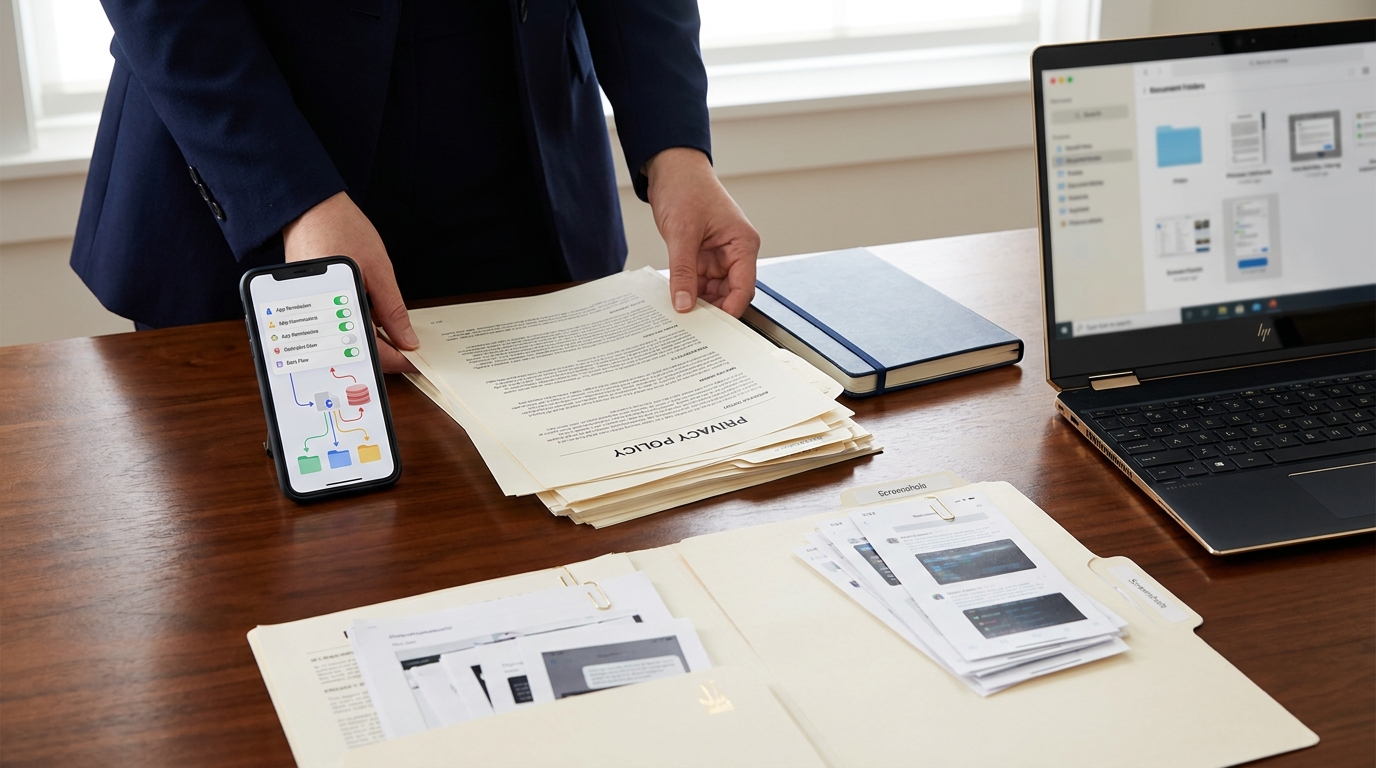
If you suspect a privacy problem, avoid assuming the cause before gathering facts. A good record is more useful than a broad accusation. Start by documenting exactly what you observed and when it happened.
Write down the date, the advertisement you saw, the app or device involved, and any unusual microphone indicator. Then take screenshots where possible.
Next, review the company’s privacy policy and permission settings. Save the version you relied on because policies can change. If the company makes a specific statement about microphone access, voice data, tracking, or advertising, preserve that statement as well.
Build a Clear Privacy Record Before Filing a Complaint
Organize your evidence chronologically. A simple folder can include screenshots, settings, privacy policies, emails, chats, receipts, and customer-service notes.
Then, describe the issue in neutral language. For example, instead of writing, “This company is spying on me,” explain that an app had microphone permission, identify what the company represented about that permission, and describe what you observed.
This helps separate facts from assumptions.
When to Escalate a Privacy Concern
If a company cannot explain its data practices, consider using its privacy or support channel first. Ask what information was collected, why it was collected, whether it was shared, and how you can change your preferences or delete information where applicable.
If the response does not resolve the issue, you may consider reporting a deceptive or unfair practice to an appropriate consumer-protection authority. In the United States, the FTC accepts reports involving fraud, deceptive business practices, and privacy-related concerns.
State privacy laws may also provide additional rights, depending on where you live and the type of business involved. Because those rules vary, avoid assuming that the same access, deletion, or opt-out rights apply everywhere.
For a more structured way to prepare, browse our Legal Checklists. You can also review our Consumer Rights guides for help organizing purchase records, communications, and other evidence.
If the issue involves meaningful financial loss, identity theft, sensitive information, employment consequences, or another serious legal concern, consider speaking with a qualified attorney. Our Find Legal Help page provides links to trusted resources for locating legal assistance.
The main lesson is simple: a highly relevant advertisement does not prove that your phone secretly recorded a conversation. At the same time, consumers should take microphone permissions and voice-data claims seriously.
Review your app permissions, limit access that is not necessary, understand how voice assistants work, save important privacy statements, and document unusual activity. Those steps create a clearer record if you need to challenge a company’s practices.
The Legal Checklist provides general educational information only and does not provide legal advice. Privacy rights and procedures vary by jurisdiction and circumstances. Consult a qualified legal professional about your specific situation.